Visitors Guide to Pike County, Missouri
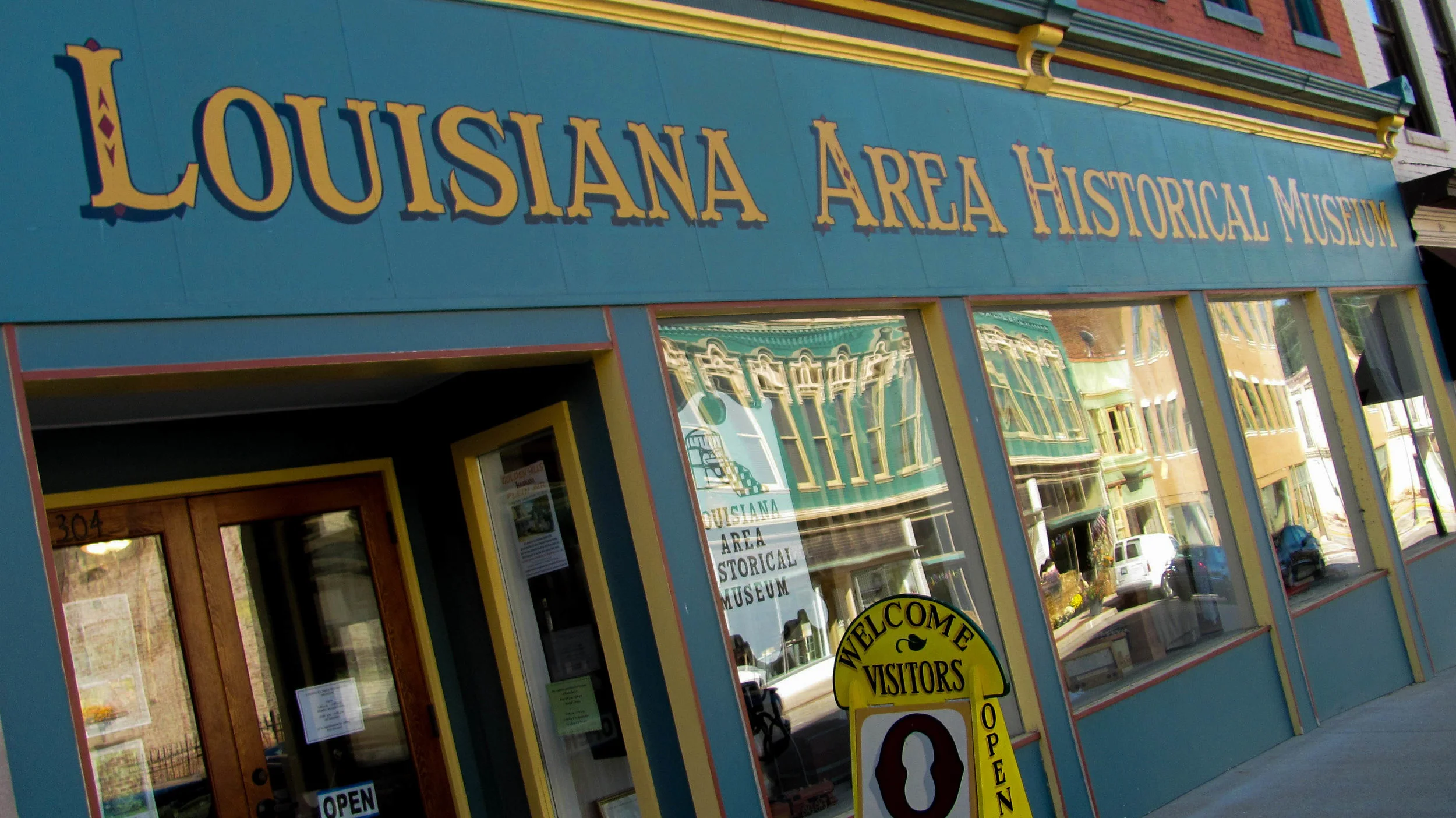
The Louisiana Area Historical Museum
Pike County is located about an hour's drive north of St. Louis and lies between the Mississippi River and the northeast plains of Missouri and was called the "Land of the Golden Hills" by early French explorers. The eastern region that borders the Mississippi is dominated by the Lincoln Hills, an area that resembles the rugged and forested hills of the Ozarks with steeply sloping uplands and prominent knobs and ridges dotted with limestone and shale outcroppings. The Great River Road MO-79 through this region has been designated the Little Dixie Highway of the Great River Road, a National Scenic Byway, as it travels over the bluffs and visits the river towns of Clarksville and Louisiana.
The first European settlers arrived in the early 1800's in the northeast part of the county near the Salt River valley and established a trade economy with the Fox and Sauk tribes. Tensions with the tribes grew in the days leading to the War of 1812 and Great Britain encouraged the natives to attack the American settlers. Although forts were built to protect the settlers most fled to south to St. Louis for the duration of the war. After the war, the settlers returned and began building permanent settlements

Main Street Clarksville on the Mississippi river front
Louisiana and Clarksville were the first towns to be established after the War of 1812. Louisiana was settled in 1816 just north of Noix Creek and south of Salt River along the Mississippi. In the same year Tennessee, Kentucky, and Virginia immigrants established Clarksville as a Mississippi River port. Pike County was established in 1819 being partitioned from St. Charles County and it included land extending up to the Iowa border and was eventually further partitioned into nine counties and parts of six others. Pike County was named for Zebulon M. Pike who was known for his 1805 exploration of the Mississippi River headwaters, his later explorations of the Missouri, Osage, and Arkansas Rivers, and for Pike's Peak in Colorado, which he recorded in 1806. Louisiana was named the county seated but in 1822, the Missouri Legislature moved the county seat to the Bowling Green, which was more centrally located.
Farms began taking over the prairie beyond the hill country near the river. Manufacturing developed as factories were built. River commerce grew as the wharfs along the river were filled with products. In 1816, James Stark settled in Louisiana and planted apple scions that he brought with him from Kentucky and this evolved into one of the largest nursery businesses in America. Railroads began to replace river traffic when the Chicago & Alton Railroad reached Pike County in 1871 and the St. Louis & Hannibal Railroad reached Bowling Green in 1876. Interstate trucking gained importance with the completion of the Mississippi River Bridge in 1928.
Manufacturing still plays a vital role in the economy of Pike County but tourism is gaining importance as visitors realize what an interesting place the region is to visit. In 2002 the Highway 79 from Clarksville north to the Pike and Ralls Counties border was designated the Little Dixie Highway of the Great River Road. The region offers impressive views of the Mississippi from the tops of the limestone bluffs and Victorian era streetscapes in Louisiana and Clarksville.
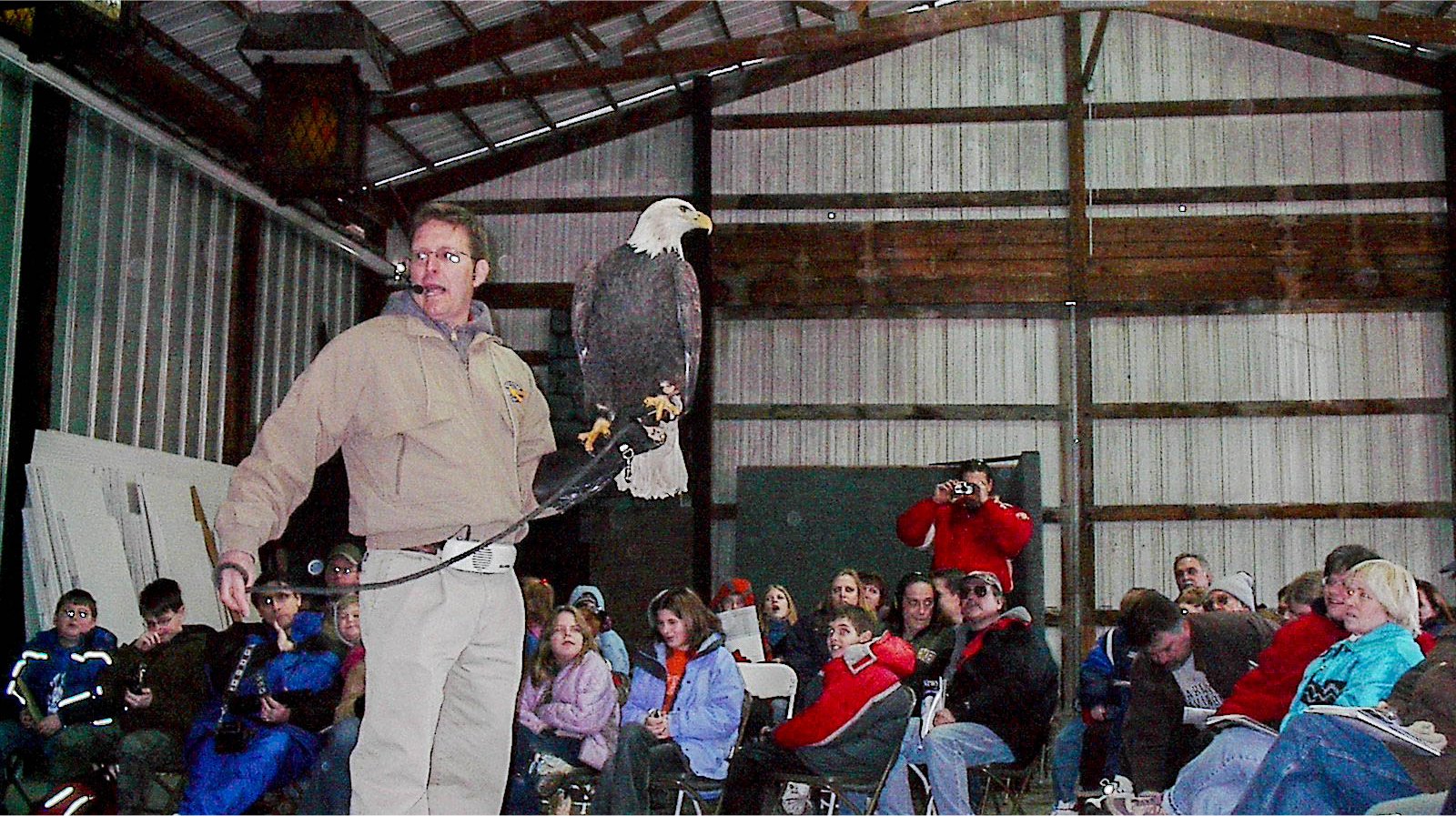
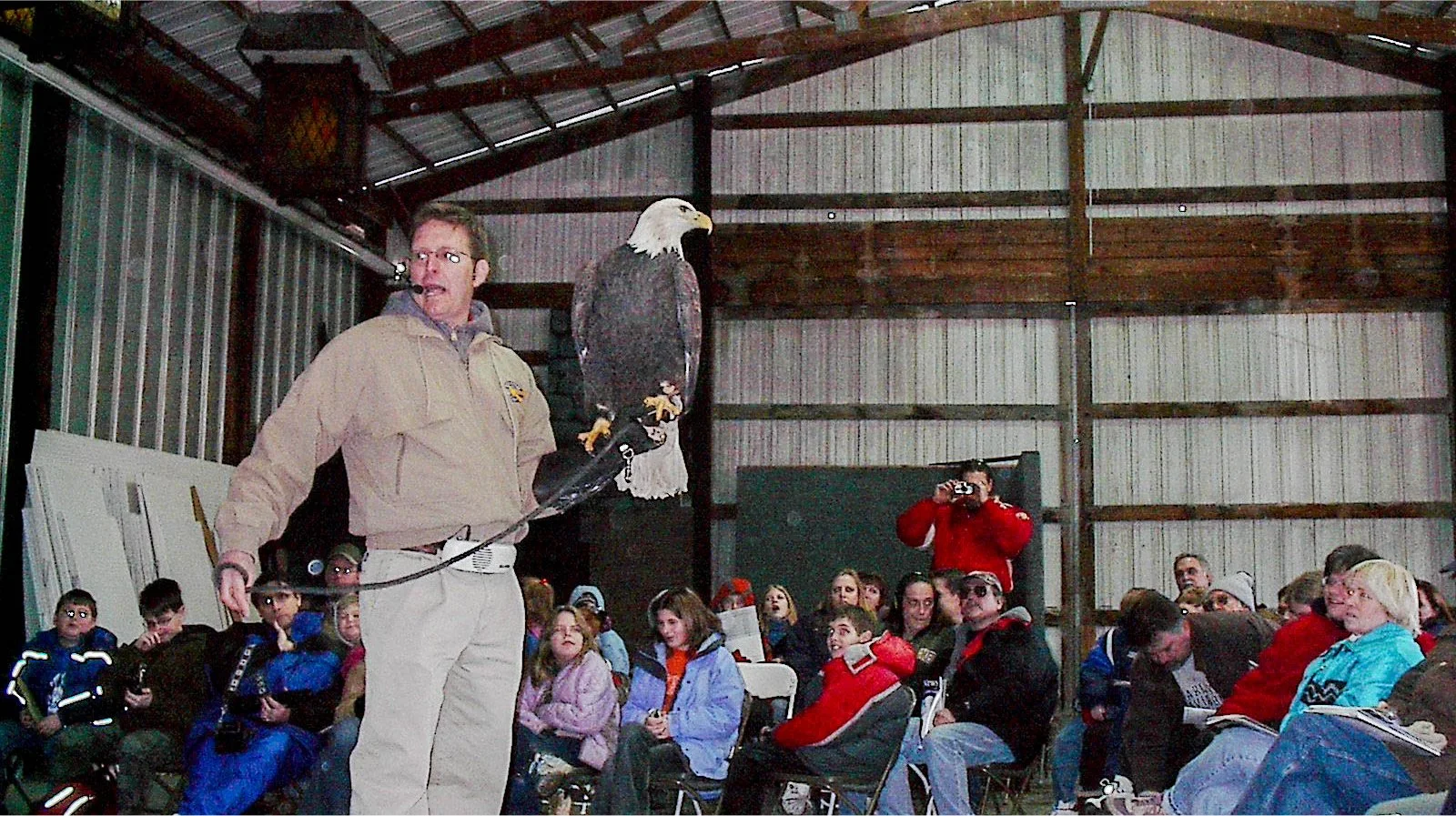
Eagle Days in Clarksville
The immigrants from Kentucky, Tennessee, and Virginia brought with them their culture giving the area the nickname Little Dixie. A burgeoning artist colony has revitalized both Louisiana and Clarksville, which the artists celebrate twice a year with the 50 Miles of Art event. Antique shops and great restaurants round out the experience of these two river towns. There are great birding opportunities as the region is part of the Mississippi Flyway, which is used by nearly 40% of North American waterfowl during their annual migrations. Clarksville bills itself as "the eagle viewing capital of the United States" and holds the popular Eagle Days festival (photo right) every January. The 30-mile byway is small by byway standards making it a great choice for a day trip or for an extended visit.